
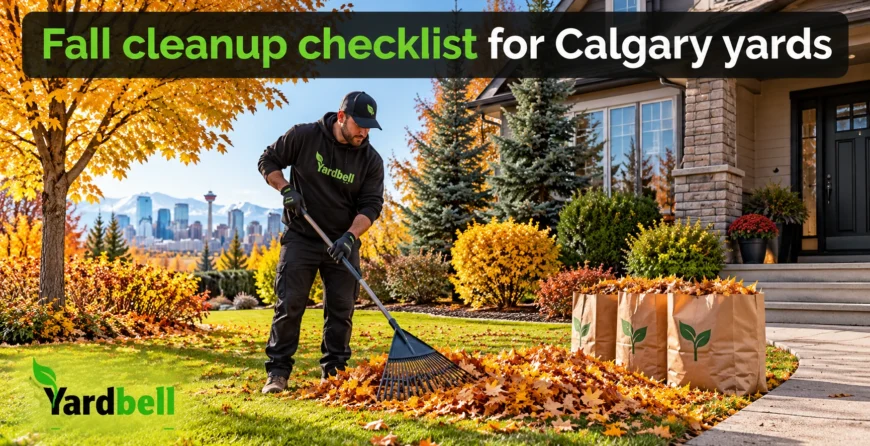
Calgary’s fall weather can change quickly. One weekend the lawn is covered in yellow leaves; a few days later the same leaves can be trapped under snow. This fall cleanup checklist helps you prioritize the work that matters.
Start with leaves and debris
Rake or blow thick piles from the lawn, especially from corners, fences and shaded areas. A light scattering of leaves may be mulched with a mower, but a heavy wet layer can smother grass. Collect branches, windblown litter and fallen fruit.
Give the lawn a final look
Cut the grass when it is still growing and dry enough to mow without ruts. Avoid scalping it. Check bare patches and compacted sections, and leave irrigation winterization to an appropriate professional if your system needs it.
Tidy beds without stripping everything
Remove diseased plant material and obvious trash. Healthy stems and leaves in selected beds can offer winter habitat, so a completely bare garden isn’t always necessary. Move pots and hoses that could crack in freezing temperatures.
Keep walkways and drainage clear
Sweep steps, patios and paths. Check surface drains and downspouts for leaf buildup. Only clean gutters with suitable ladder and fall safety practices; hire help for high or awkward rooflines.
Put yard waste in the right place
Calgary’s green cart accepts leaves, grass clippings and qualifying small branches. Fill the cart first, then use paper yard-waste bags as permitted. Review the City’s current rules and pickup schedule before setting out extra bags: City of Calgary Green Cart program.
Quick weekend checklist
- Remove heavy leaf mats from the lawn.
- Collect branches and litter.
- Make the final mow when conditions allow.
- Clear outdoor drains and access routes.
- Store hoses and loose yard items.
- Arrange gutter cleaning if needed.
If your yard has several mature trees or you simply need the job completed before the weather turns, see YardBell’s fall cleanup service. A few photos of the front and back yards help make a quote more accurate.
The right order for a Calgary fall cleanup
Start with the hazards and areas most likely to cause winter problems, then work toward appearance. Clear front steps, drains, sidewalks and doorways first. Next, lift dense leaves from the lawn, remove debris from beds that needs disposal and complete mowing if the grass is still growing. Leave delicate planting work until you know what the plants need. The order matters because you might have only a short period between wet weather and a sudden freeze.
Choosing what to keep in garden beds
Not every fallen leaf needs to leave your property. A modest layer of shredded clean leaves can help protect soil in some planting beds. Standing perennial stems can provide habitat and interest through winter. By contrast, badly diseased foliage, litter and heavy wet piles on susceptible plants may be better removed. Check each area rather than treating flower beds and turf exactly the same way. Protect young shrubs from being buried under bulky heaps of clippings or bagged debris.
Leaf cleanup without harming your lawn
Wait until the turf has dried enough to walk on without leaving deep impressions. Work with a flexible rake rather than digging at the crown of the grass. For a small amount of leaves, mow them into fine pieces and check whether grass blades remain visible. If a thick layer remains, collect it. At the end of the job, inspect shaded areas beneath shrubs and along fences; these often hold damp leaves even after the centre of the lawn looks clean.
What Calgary homeowners should do with branches
Separate small permitted yard waste from oversized logs and construction debris. Before adding branches to a green cart, check current City limits on size, weight and the types of accepted material. Paper yard-waste bags may be appropriate for additional leaves depending on the City’s collection instructions. Don’t assume plastic bags will be accepted. If a storm has left heavy limbs, avoid cutting overhead or near wires; tree work requires different equipment and safety precautions than routine leaf raking.
Plan your cleanup around actual conditions
There is no guarantee that the last leaves will fall before the first snowfall. Some owners schedule a first visit for lawn health and pathways and a second smaller visit after major leaf drop. Others do a single comprehensive cleanup when most nearby trees are bare. If the weather changes suddenly, focus on safe access and avoid tearing frozen leaves from the soil. Anything cosmetic that cannot be done safely can wait until spring.
Common fall cleanup mistakes
Bagging damp leaves and leaving them against siding can trap moisture. Pushing debris into the street can block drainage. Cutting grass extremely short may stress it before winter. Cleaning high gutters without proper fall protection poses a much greater risk than the leaves themselves. Another common mistake is booking a service without clarifying whether bagging, haul-away, flower beds or downspouts are included. A written scope avoids surprises for both the homeowner and the crew.
Frequently Asked Questions
When should you start? Begin as leaves accumulate and schedule a final pass after most leaves have fallen, rather than waiting for one perfect date.
Do I need to remove every leaf? No. Remove heavy mats from turf and walking areas; small amounts can sometimes be mulched.
Should the lawn be fertilized during cleanup? Only if conditions and a lawn-specific plan support it. Cleanup and fertilizer are separate decisions.
Can yard cleanup include gutters? Sometimes, but ask specifically. Height, roof access and downspout flushing may require a separate quote.
Contact YardBell Tree & Lawn Services: yardbell.ca | 403-412-4311