
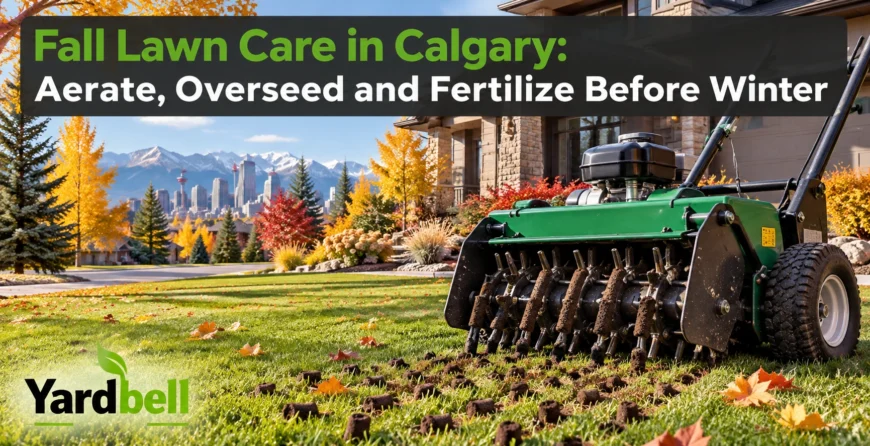
A healthy Calgary lawn doesn’t need every possible treatment each fall. It needs the right work, in the right conditions, before the soil freezes.
Start with the lawn’s condition
Walk the property and note compacted areas, bare patches, drainage issues and heavy thatch. A lawn that is thin from shade has a different problem from one worn down by pets or regular traffic. Fixing the cause matters more than adding seed everywhere.
When core aeration helps
Core aeration removes small soil plugs to relieve compaction and support water and air movement. It is most helpful where soil is compacted and turf is actively growing. Skip overly wet ground, frozen soil and areas where buried utilities or irrigation heads aren’t marked. Learn about core aeration.
Overseeding needs growing time
Cool-season grass seed needs adequate soil warmth and moisture to germinate and establish. Seeding shortly before a hard freeze may not provide enough time for new plants to root. Follow the seed blend’s instructions, prepare good soil contact and plan watering responsibly.
Fertilization: avoid guessing
Use a soil test or a lawn-specific recommendation rather than assuming more nitrogen is always better. Overapplication can harm turf or contribute to runoff. Check the product label and any applicable local requirements. See YardBell’s over-seeding and fertilization service.
The rest of the fall routine
Remove dense leaf mats, mow while grass is growing, avoid working soggy ground, and winterize irrigation when appropriate. If frost comes early, stop rather than forcing a job into poor conditions.
For a practical plan, start with what your lawn actually needs this season rather than booking every treatment automatically.
Understand Calgary’s growing-season window
Fall is often suitable for work on cool-season lawns, but timing is more important than the date printed on a calendar. Turf should still be growing and the soil should be workable. A cold September may behave differently from an unusually warm October. If your lawn is dormant, saturated or starting to freeze, aggressive treatment can do more harm than good. Consider recent weather, soil conditions and the likely time remaining before hard frost when deciding which treatments are worth doing.
Diagnosing compaction before aeration
Compacted soil may show up as thin grass along frequently used paths, water that puddles after rain or turf that struggles despite normal care. But those symptoms can also have other causes. Dig a small inspection area where appropriate or consult a lawn specialist. Core aeration helps loosen compacted zones by extracting plugs; it is not a cure for persistent shade, irrigation failures, buried construction debris or severely uneven grading. Flag sprinkler heads, shallow cables and other obstacles before equipment enters the lawn.
What overseeding can and cannot accomplish
Overseeding adds grass seed to established turf where new plants could improve coverage. It works best with a suitable seed mixture, sound soil contact and enough water and growing time for establishment. Seed tossed onto an unprepared blanket of thatch may not germinate well. Consider the sun exposure, traffic and irrigation available to the area. Where a lawn fails repeatedly because it receives almost no sunlight, changing the landscaping plan could make more sense than repeating the same seeding treatment every year.
Fertilization should serve a specific purpose
A soil test can help identify nutrient needs. Avoid selecting a product simply because its bag promises winter protection. Follow label guidance on rate and application, and keep material off sidewalks where it could wash away. Do not apply fertilizer to frozen ground or just before conditions likely to cause runoff. Newly seeded turf may need a different schedule than an established healthy lawn. If you use a contractor, ask what product is proposed and why it is suited to your grass and current conditions.
Pairing services sensibly
Core aeration and overseeding can complement each other when the lawn is actively growing and conditions support good seed-to-soil contact. Fertilization may also be appropriate, but the sequence and application rate should be intentional. Not every yard needs all three. A compacted, otherwise healthy lawn may benefit from aeration alone. A thin lawn under adequate sunlight might require seed and watering more than fertilization. Ask for the reasoning behind each proposed item rather than treating a package as automatically necessary.
Finish with simple winter preparation
Remove thick mats of leaves, keep drainage routes open and mow as growth slows without scalping the turf. Avoid heavy equipment and foot traffic on waterlogged ground. Store hoses and prepare irrigation for freezing weather as needed. If the first snow arrives, do not force unfinished treatments across frozen soil. Put a note on your spring calendar about any bare or weak areas so you can reassess them when conditions return.
Frequently Asked Questions
Can I aerate and overseed on the same day? They are often paired when the season and soil conditions are suitable, but the calendar matters. Calgary’s weather can shorten the establishment window.
Will aeration immediately make grass greener? Not necessarily. It addresses compaction; turf response depends on soil, moisture, growing conditions and existing lawn health.
How late can I seed? There is no universally safe Calgary cutoff. Follow seed requirements and allow enough growing time before frost, or consult a local turf specialist about alternatives.
Contact YardBell Tree & Lawn Services: yardbell.ca | 403-412-4311