
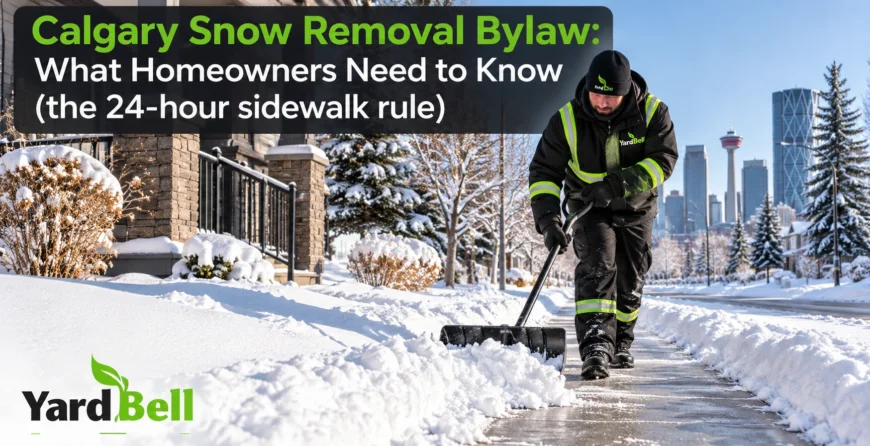
Snow on a sidewalk isn’t just inconvenient. It can stop neighbours using wheelchairs, walkers or strollers from getting through. Calgary’s sidewalk snow-removal rule sets a clear deadline for adjacent property owners.
What does the 24-hour rule say?
Under section 67 of Calgary’s Street Bylaw, property owners must remove snow and ice from the public sidewalk bordering their property down to the bare surface within 24 hours after snowfall ends. For applicable public pathways bordering the property, the City specifies a minimum cleared width of 1.5 metres, also to the bare surface within that period.
The key detail is after snowfall ends, not 24 hours after the snow starts. Check the City’s current requirements here: City of Calgary snow and ice bylaws.
Where can shoveled snow go?
Snow from a private driveway or walkway must stay on private property—not be pushed into the road. The City’s rules allow snow cleared from public sidewalks and pathways to be moved to another public area, subject to other safety restrictions. Avoid blocking intersections, catch basins and neighbours’ access.
What happens if you miss the deadline?
The City describes enforcement that can include fines and charging owners for City-arranged clearing. Rates and procedures may change, so check the official bylaw page rather than relying on an old social-media post.
How to stay ahead of it
Keep a shovel and traction material near the entrance. Clear the public sidewalk promptly after storms, monitor icy patches during Chinooks and arrange backup coverage before travelling. If you hire a contractor, confirm which sidewalks, stairs and paths are included and how service visits are triggered.
YardBell provides snow shoveling for pedestrian access and snow plowing for suitable larger paved areas. A contract can support a maintenance plan, but the property owner’s bylaw obligation remains.
How to interpret the deadline after a long storm
The 24-hour clock is tied to the end of snowfall, so record when the snow stops in your area rather than guessing based on when it first began. During multi-day weather events, clearing periodically is still practical: otherwise a heavy layer may become compacted, icy and much harder to remove. A predictable routine also helps people using the sidewalk while the storm is ongoing. Check official City updates when an unusual event affects operations or enforcement.
Sidewalks, pathways and private walkways are not identical
Your front path to the door is private property; the public sidewalk beside the street is different. The Street Bylaw places a duty on adjacent property owners for particular public walking areas. If your property borders a pathway, consult the City’s specifications rather than assuming a narrow shovel-width trail qualifies. Corner lots may have more than one frontage to maintain. Apartment, commercial and condominium sites should clarify responsibility through their management arrangements, but those agreements don’t change the underlying municipal rule.
What should you do about thick ice?
Start by preventing falls. An icy slab can be difficult to remove without damaging the surface or injuring yourself. A carefully selected de-icer may help loosen the bond, while traction grit may offer a temporary improvement. Neither option automatically replaces the requirement to clear down to the surface. Products can affect nearby plants, pets and paving materials; use them according to their labels. Where water keeps flowing across the route, investigate downspouts and other drainage sources so the ice does not return after each treatment.
Neighbours, travel and vacant homes
A household that travels frequently should arrange coverage before the first storm, not when a neighbour reports a problem. Share contact information with a reliable person who can check the property. For rental homes, the landlord and occupant may have an agreement about who physically shovels, but the City describes its rules in terms of property-owner duties. If the sidewalk remains blocked, contact the City through its published channels rather than escalating a disagreement personally.
Hiring snow service: what belongs in the agreement
List the public sidewalk separately from the driveway and front steps. Confirm the exact boundaries, a trigger for visits, service timing, handling of snow berms, and whether ice treatment is included. Ask for a plan if weather creates multiple accumulations in a short time. For commercial sites, identify accessible ramps and pedestrian entrances. Snow storage locations should not obstruct sightlines, fire access, drainage or crossings. A clear site map and photographs help avoid misunderstandings.
For the authoritative wording and any changes to enforcement or fines, use the City of Calgary’s snow-and-ice bylaw page rather than relying on an outdated quoted amount.
Frequently Asked Questions
Does clearing just a narrow trail count? The City says the adjacent public sidewalk must be cleared down to its bare surface; the distinct 1.5-metre minimum applies to qualifying public pathways. Check the classification of your frontage if uncertain.
What if snow falls overnight? The City rule refers to the period after snowfall ends; don’t automatically calculate from the first flakes.
Can I shovel driveway snow onto the street? No. The City’s guidance distinguishes private-property snow from public-sidewalk snow; driveway snow should stay on private property.
Does hiring a contractor transfer my responsibility? The arrangement may help you comply, but you should still check service completion and understand your duties under the bylaw.
Contact YardBell Tree & Lawn Services: yardbell.ca | 403-412-4311