
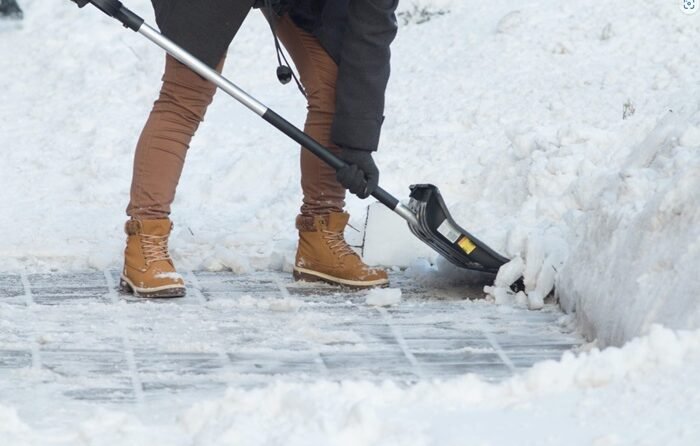
When a Calgary walkway turns slippery, three familiar tools do different jobs: a shovel removes snow, ice melt helps loosen certain frozen buildup, and sand adds grip. Choosing the right one is easier when you know the difference.
Shoveling: the first step
Clear fresh snow before foot traffic compresses it. Use a tool suited to your surface and avoid striking concrete joints, stairs or decorative pavers. Removing snow early also leaves less material to melt and refreeze during a Chinook.
Ice melt: a tool, not a cure-all
De-icers work by changing freezing conditions, but different products have different temperature limits, application guidance and effects on surfaces. Some can damage concrete, harm vegetation or irritate paws when overused. Check the label, use only the specified amount and keep runoff away from sensitive plants.
Sand: traction without melting
Sand provides temporary grip on a slippery patch but doesn’t eliminate underlying ice. It may be useful in very cold conditions when a product is less effective. Sweep up excess when conditions improve so it doesn’t wash into drainage systems.
What should you use?
For fresh snowfall, shovel promptly. For thin ice in a suitable temperature range, a surface-compatible de-icer may help. For immediate grip, especially while waiting for removal, sand can be useful. Thick bonded ice may need professional assessment instead of forceful chipping.
A Calgary-specific reminder
The City requires snow and ice on adjacent public sidewalks to be removed down to the bare surface within 24 hours after snowfall ends. Traction material alone may not satisfy that obligation. See City of Calgary snow and ice bylaws.
YardBell can help with ice removal and snow shoveling in Calgary. Share a photo if the area is repeatedly icing up; drainage or runoff may be part of the problem.
Quick tip: Keep a small supply of traction material in a dry, easy-to-reach spot before the first freeze.
Why different tools solve different problems
The biggest mistake is using a material for a job it cannot do. A shovel moves snow off the walking surface, but may leave bonded ice underneath. Sand makes an icy patch less slippery in the short term, yet does not remove ice. De-icer may help break an ice bond under suitable conditions, but cannot compensate for poor drainage or a large mound of compacted snow. Begin by identifying whether you are dealing with fresh snow, packed snow, thin glaze ice or runoff that repeatedly freezes.
Choosing a shovel and technique
A lightweight ergonomic shovel can reduce strain during routine storms. Push small amounts when possible instead of lifting heavy loads from a full blade. Keep the walking route manageable and take breaks. Rubber or plastic edges may be gentler on decorative surfaces, but consult the surface manufacturer before scraping. During freezing rain, avoid forceful chopping into fragile pavers or cracked concrete. Clearing promptly after a snowfall usually requires much less effort than trying to break a compacted layer days later.
What to know about de-icing products
Products differ in active ingredients, recommended temperatures and impacts on concrete, metal, plants and animals. The label should guide how much to apply and when. Using extra product does not guarantee faster clearing and can create runoff or damage. Sweeping away remaining granules after conditions improve may be appropriate where the label recommends it. Never mix products unless their manufacturers explicitly permit it. If someone in the household has pets or the walkway borders a sensitive garden, mention that before selecting a treatment.
Sand and grit: useful but temporary
Traction material is most helpful when you need immediate grip while conditions remain icy. It is often used at entrances, ramps and steep sections, though it can move under foot or vehicle traffic. As ice melts, grit can accumulate in doorways or drains. Sweep excess material up rather than pushing it into catch basins. Keep in mind that a thin layer of sand may become buried by new snow, requiring clearing again. It is one part of a maintenance plan, not proof that the surface has become ice-free.
A practical three-step approach
First, remove loose snow safely. Second, evaluate whether ice is bonded to the surface and whether an approved de-icer or mechanical removal method is appropriate. Third, use compatible traction material where slipping remains possible and check the area again as temperatures change. In Calgary, Chinook melting followed by a cold evening can make a once-clear path slippery again. Pay particular attention to north-facing entries and places where downspout runoff crosses a public sidewalk.
Environmental and access considerations
Do not wash residue or debris straight into storm drains. Protect landscaping when applying products and store supplies in their labelled containers away from children and animals. Property owners should also consider people using mobility aids: a walkway littered with loose piles of snow can be difficult even if traction grit has been spread. Keep Calgary’s bare-surface clearing obligation for applicable public sidewalks in mind and consult the official bylaw for current requirements.
Frequently Asked Questions
Can I use sand instead of shoveling? Sand can improve traction, but it does not remove snow or meet every clearing requirement.
What if ice keeps returning at the same spot? Check the slope and the path of roof runoff. A drainage issue can be more important than the choice of de-icer.
Contact YardBell Tree & Lawn Services: yardbell.ca | 403-412-4311