
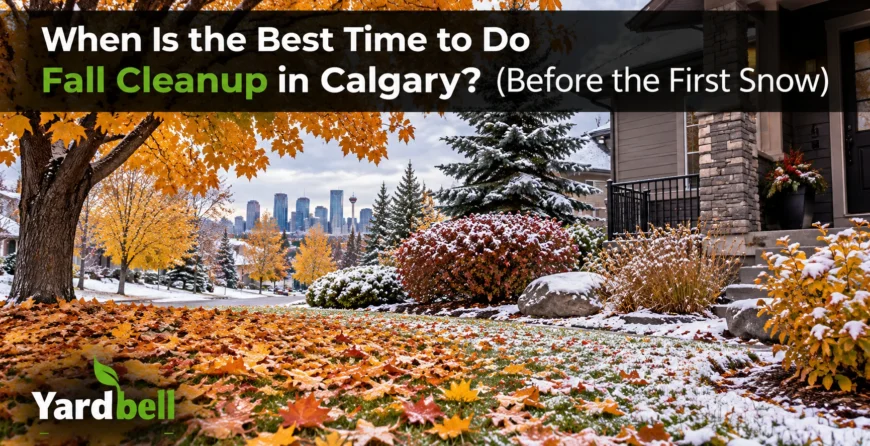
The best time for fall cleanup in Calgary is not one fixed date on the calendar. It’s a window between meaningful leaf drop and the point when snow or frozen ground makes yard work difficult.
Why one date doesn’t work for every yard
A yard with conifers may need needle cleanup before a yard surrounded by deciduous trees has finished shedding leaves. Wind, elevation, shade and the first cold snap all change the schedule. Waiting until every tree is bare can backfire if snow arrives early.
A simple two-pass approach
First pass: When leaves start accumulating heavily, clear lawn mats, steps, drains and entry paths. Remove litter and easy-to-reach debris.
Final pass: Once most leaves have dropped—and before conditions turn icy—finish raking, remove accumulated debris, organize garden beds and arrange any remaining gutter work.
What matters most before snow?
Prioritize thick leaf layers on grass, blocked surface drains, loose items that could be buried, and access routes. Cosmetic details can wait until spring if the ground is frozen or the job would damage wet turf.
Should gutter cleaning happen at the same time?
Often it makes sense to coordinate the visits. Gutters tend to refill while nearby trees continue dropping leaves, so a final gutter check after substantial leaf fall can be worthwhile. See gutter cleaning in Calgary.
What if snow arrives first?
Don’t rake through deep snow or tear at frozen leaves. Remove any immediately accessible drainage or walking hazards safely, then plan a spring visit for work that couldn’t be completed.
For full-yard work, see YardBell’s fall cleanup service. A few photos and your preferred completion window help plan the job.
Aim to finish the important work before winter conditions make it harder—not before an arbitrary date.
Watch the trees rather than the calendar
Calgary homeowners often think of fall cleanup as an October task, but leaf drop varies by species and site. A sunny sheltered yard may behave differently from a windy property exposed to the north. Birch, poplar, ornamental trees and conifers shed material at different rates. Start watching how much debris is collecting on the lawn and in drains. When leaves form a heavy damp mat, remove them even if many branches are still full. There is no benefit in waiting for the very last leaf when a shaded lawn is already smothered.
What to do during the early fall window
In the first stage, clear walkways and storm drainage routes, gather litter, prune only where seasonally appropriate and review any lawn treatments before the growth window closes. A light mowing pass may help mulch small amounts of leaves. Check whether flower beds contain diseased plant material that should be removed. If you are planning to hire help, request a quote before the weather forecast becomes urgent. Leave enough flexibility for a return visit if your trees have not finished shedding.
Planning a final visit before winter
After a major leaf drop, prioritize lawns, entrances and areas that are difficult to reach once snow accumulates. Collect heavy piles, clear around downspouts and move loose outdoor objects into storage. Coordinate high gutter cleaning with a qualified crew rather than treating it as an ordinary ground-level leaf chore. Take a final walk around the home to see whether water drains away from entrances and whether branches are blocking access. The goal is a yard that can handle winter, not a perfectly bare landscape.
What if a surprise snowfall comes first?
A light early snowfall does not always mean the season is over, but raking wet grass or scraping frozen debris can damage turf. Wait for a safe thaw and reassess the conditions. When prolonged winter weather arrives, postpone aesthetic tasks and focus on safety around walkways, doors and drains. Do not walk on an icy roof or climb ladders to pull frozen leaves from gutters. Make a note of work that should be completed in spring rather than forcing it into dangerous conditions.
One visit or two visits?
If your property has few trees and most leaves fall within a short period, one carefully timed visit may be enough. Where large trees shed gradually, an early bulk removal followed by a smaller final pass can help keep the grass healthy and avoid an overwhelming cleanup. Ask the provider how return visits are priced and whether bagging, removal and gutter care are separate items. If a service promises completion before an exact date, ask how weather delays are handled and what work can safely be rescheduled.
Avoid common timing mistakes
Waiting until a big wet leaf layer is frozen may create extra work in spring. Cutting grass drastically short just because winter is approaching can stress the lawn. Scheduling gutter cleaning far too early may allow leaves to refill the troughs before freeze-up. Another mistake is assuming all neighborhoods experience the same first snow and leaf drop. Use the condition of your actual property alongside forecasts, and be willing to change plans when weather shifts.
Frequently Asked Questions
Is October always the best month? Not necessarily. Many homeowners schedule autumn cleanup around October, but local conditions and leaf drop are more useful guides than the month alone.
What if my leaves fall after the first snow? Clear reachable hazards when safe, and complete the rest during a thaw or in spring.
Should gutter cleaning be the last task? It often makes sense after substantial leaf drop, but safety, access and the tree species around the home matter more than a fixed sequence.
Contact YardBell Tree & Lawn Services: yardbell.ca | 403-412-4311