
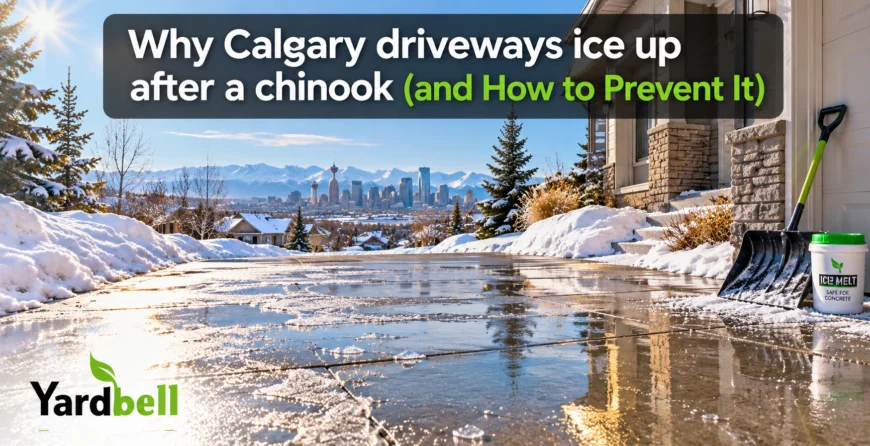
A Chinook can make a Calgary driveway look clear by lunchtime and dangerously slippery by dinner. The problem isn’t simply the snowfall. It’s what happens when the warm spell ends.
Why Chinooks create driveway ice
Warm winds raise temperatures quickly. Snowbanks, roof runoff and compacted snow start melting; water travels across the driveway and settles in low spots. When temperatures drop again, that thin water layer freezes into hard-to-see ice. North-facing surfaces and shaded areas may stay slick even when the street looks dry.
Five ways to reduce refreezing
- Shovel early, before vehicle tires compress fresh snow into a hard layer.
- Keep snow piles away from garage doors and spots where meltwater will drain across the walking route.
- Check downspout discharge: don’t direct roof water onto a driveway or sidewalk.
- Clear small drainage paths while surfaces are thawed; don’t chip aggressively at concrete or pavers.
- Apply a product appropriate for the surface and temperature, following the manufacturer’s instructions. Sand improves traction but doesn’t melt ice.
What if the ice is already thick?
Start with traction and a safe alternate walking route. A plastic-edged scraper may help remove softened layers; forcing a metal tool can damage the surface. Be cautious around steps and garage thresholds, where a fall could be serious.
When repeated freeze–thaw cycles create stubborn buildup, a professional visit can help assess removal and ice-control options. YardBell offers ice removal in Calgary and snow shoveling. Send a photo and the property address when requesting a quote.
The best time to stop Chinook ice is before meltwater has a chance to freeze again.
Where meltwater comes from in a typical Calgary home
Look beyond the obvious snowbank. A south-facing roof can begin shedding water while a shaded driveway remains below freezing. Some homes have downspout extensions that terminate close to the garage pad. Others have shallow depressions where tire tracks trap water. During a thaw, walk around from a safe, dry area and note where each stream goes. Photograph any persistent puddles. These observations help distinguish a one-off icy morning from a drainage pattern that needs a lasting fix.
What to do before the next Chinook
Check the forecast and clear packed snow when it can be removed without damaging the surface. Move stored snow away from entrances and walkways where possible. Keep a broom, shovel and traction material by a sheltered door. If you have an exterior drain, make sure its opening is visible and free of debris. Redirecting drainage may involve grading or downspout changes; consult an appropriate professional rather than simply sending water toward a neighbour’s lot. Plan an accessible route for anyone who has difficulty walking on slippery ground.
Managing ice on concrete, asphalt and pavers
Different surfaces react differently to aggressive scraping and chemical products. Older or damaged concrete may be particularly vulnerable to repeated freeze–thaw exposure. Decorative pavers can shift when water freezes in joints. Asphalt surfaces may have low spots that conceal deeper buildup. Follow the manufacturer’s instructions for both the pavement and any de-icer, including restrictions for newly installed surfaces. When uncertain, prioritize sand for temporary traction and ask the installer about compatible products rather than experimenting with an unknown treatment.
When to call for ice removal
A thin patch near the curb may be manageable with normal household tools. Repeated glaze ice across a steep approach, a busy entrance or several stairs deserves more caution. Professionals can evaluate accessible removal methods, but not every treatment works at every temperature. Explain whether the site has pets, landscaping, decorative stone or delicate concrete. Mention whether the ice is recurring because of runoff. Addressing the source of water matters as much as removing the current layer.
A homeowner’s check after the thaw
Once conditions improve, inspect for cracks, loose pavers and evidence of water collecting against the foundation or garage. Watch whether the next melt follows the same path. Keep a simple record of weather conditions and photographs; this can make a conversation with a drainage contractor more productive. If a public sidewalk borders your property, remember Calgary’s separate sidewalk clearing requirements. A clear driveway is not a substitute for the public walking area being safe and properly maintained.
Frequently Asked Questions
Does salt work in every cold snap? No. Performance depends on the material and pavement temperature. Follow label limits and keep products away from pets, plants and vulnerable surfaces.
Why is one half of my driveway icier? Shade, slope, sun exposure and nearby snow piles can create very different conditions only a few metres apart.
Will hot water remove an icy patch? It can create more water that rapidly refreezes. It is generally a poor choice for an outdoor walkway during freezing weather.
Can ice come back after treatment? Yes. A de-icer may help an existing patch, but fresh meltwater can produce another layer later that day. Recheck high-traffic areas as temperatures change.
Contact YardBell Tree & Lawn Services: yardbell.ca | 403-412-4311